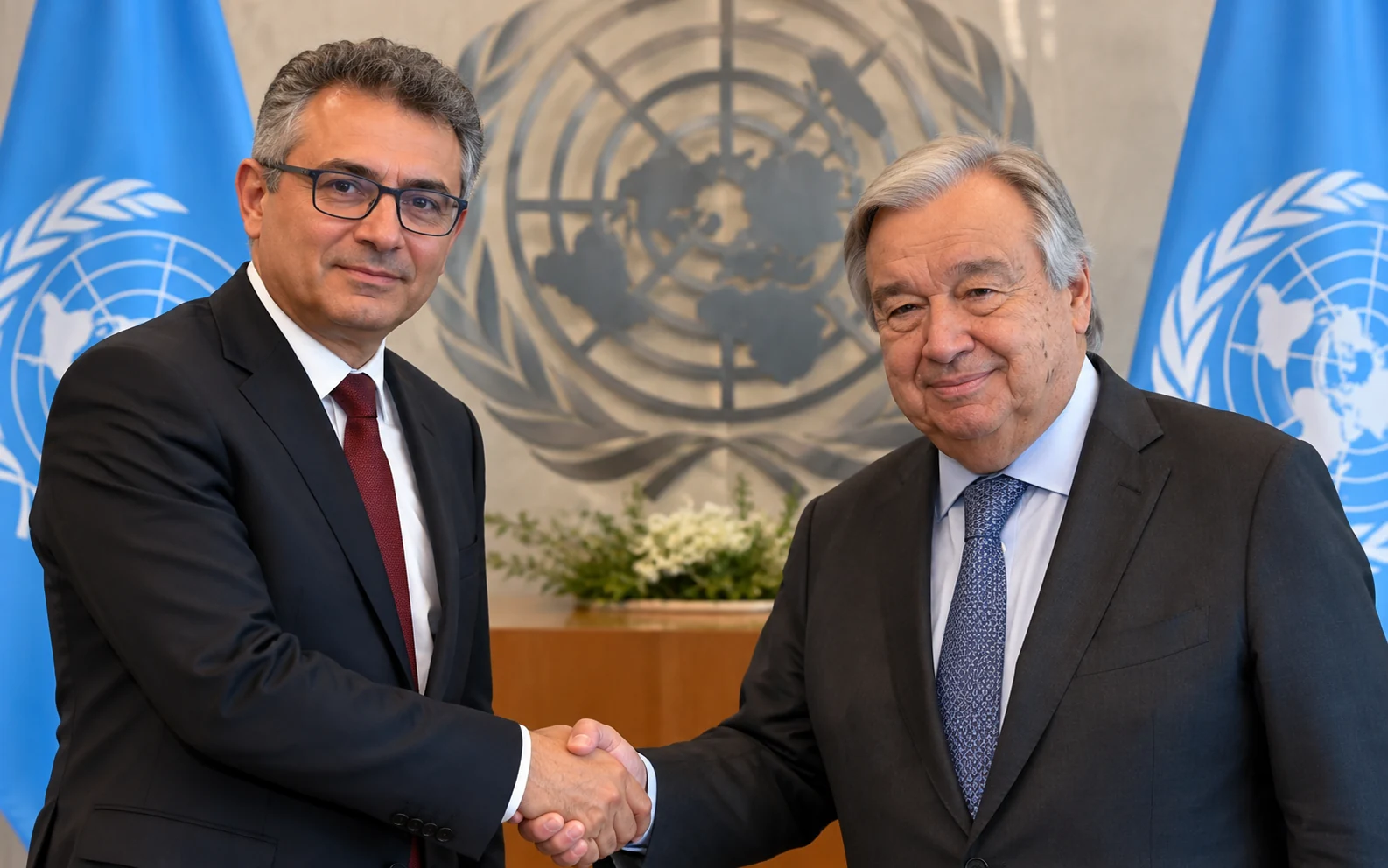
United Nations Secretary-General António Guterres has responded to complaints from Turkish Cypriot President Tufan Erhürman concerning attempts to prevent Turkish Cypriots from participating in international sporting, cultural and diplomatic activities.
The response, dated 16th October and made public on Sunday, 18th October, follows a letter sent by Erhürman on 28th August.
And although the correspondence doesn't resolve the underlying disagreements between the two communities, it raises an important question about how confidence can be established when opportunities for ordinary people to participate in international activities become political issues.
What prompted the complaint?
Erhürman had written to the United Nations following several controversial incidents involving events organised in North Cyprus.
These included attempts to prevent an FC Barcelona football camp for children, difficulties surrounding music festivals and concerns about international diplomatic contacts.
The Turkish Cypriot Presidency maintains that attempts to interfere with these activities undermine relations between the two communities.
The Republic of Cyprus has previously disputed accusations that it pressures international organisations to cancel events, arguing that its diplomatic activities involve explaining its internationally recognised position.
What did Guterres say?
According to the correspondence published by the Turkish Cypriot Presidency, Guterres acknowledged the concerns and described the reported developments as disheartening.
He said that actions obstructing confidence-building were contrary to his repeated appeals for greater mutual trust.
The Secretary-General also stressed that continued cooperation between the communities was essential if conditions were to be established for meaningful peace negotiations.
He confirmed that his Personal Envoy, María Ángela Holguín, had been asked to continue working with both sides on implementing confidence-building measures.
Importantly, the response should not be interpreted as an independent United Nations finding that every allegation made by either side has been proven.
What about the European Commission?
Erhürman had also written to the European Commission about the same concerns.
The Commission's response, dated 6th October, emphasised the importance of cooperation and developing closer relationships between Turkish Cypriots, Greek Cypriots and the European Union.
It also referred to the importance of civil society initiatives, particularly those providing opportunities for young people.
Why does this matter?
There is something rather unfortunate about children wanting to attend a football camp, or musicians wanting to perform at a festival, becoming caught up in a dispute that has continued for decades.
Whatever position people take on the Cyprus problem, opportunities for cultural, educational and sporting contact can help ordinary people understand one another.
Guterres' response does not settle the political arguments, but it reinforces an important principle.
Building confidence between communities requires more than meetings and diplomatic statements. It also requires practical cooperation and opportunities for people to meet, participate and develop relationships beyond politics.















Join the conversation
No approved comments yet. Be the first to join the conversation. Once comments are approved, member avatars and the seven reaction icons appear with each comment and reply.
Join the conversation as an ExpatExpo member.
MEMBER SIGN IN or JOIN EXPATEXPO FREE